4
key business modules
Digital Spark is a complex B2B SaaS platform developed to manage sales and field teams in a retail environment. The system connects employee activities, sales performance, KPIs, rewards and business analytics, enabling companies to track in one place how field activities impact concrete sales results.
Our team contributed to the development of a complete software ecosystem that includes native mobile apps, a PWA solution, a central administration system and advanced analytics dashboards. The platform was built as a multi-brand, modular solution adaptable to different companies, markets and organizational structures, including on-premise deployments for clients with specific infrastructure requirements.
About the project
Digital Spark was not developed as an app with a predefined set of features, but as a platform that can be adapted to the way different companies do business.
Each brand can have its own app, visual identity, colors, logos, content, users and system configuration, while sharing the same technological infrastructure and modular architecture in the background.
The central CMS allows administrators to manage users, products, tasks, rewards, KPI structures and other parameters, while data from all active modules is unified through a central analytics system.
key business modules
user environments
Native App / PWA / Admin
central analytics system
configuration options
multi-brand architecture
Challenge
The biggest challenge in the project was bringing together processes that in large organizations often run through completely separate systems — sales, field operations, employee training, inventory management, KPI tracking, rewards and bonus calculations.
In addition to a large number of features, the system had to support different organizational structures, teams, access levels and product hierarchies, as well as the ability to vary rules and scoring methods from one client to another.
That is why the platform was designed as modular from the start, so individual functions can be enabled, configured and adapted without developing a separate system for each new brand.

Architecture
The Digital Spark platform consists of four major business modules. Each solves a different problem, but they exchange data and together provide a more complete view of employee activities and results.
The central administration system connects all modules and allows companies to manage rules, users, content and data from one place.
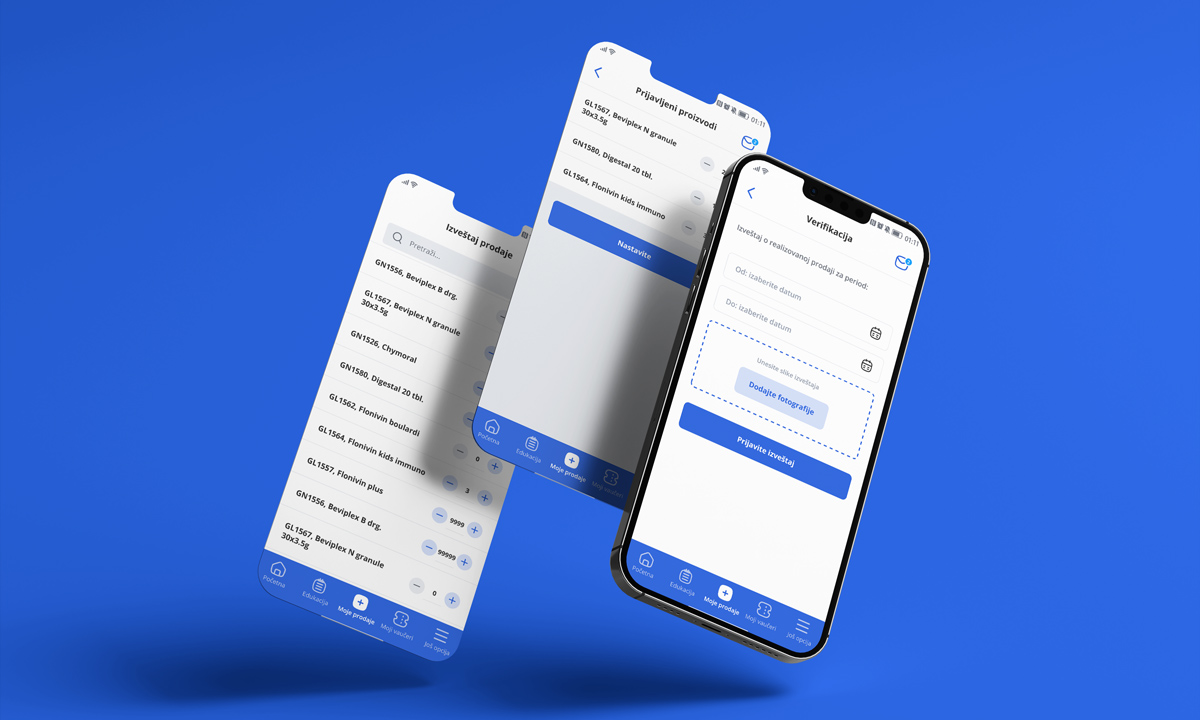
sales motivation and rewards. Users earn points for selling products the company wants to promote, and can redeem those points for vouchers, rewards, payouts and more. It also includes an educational component.
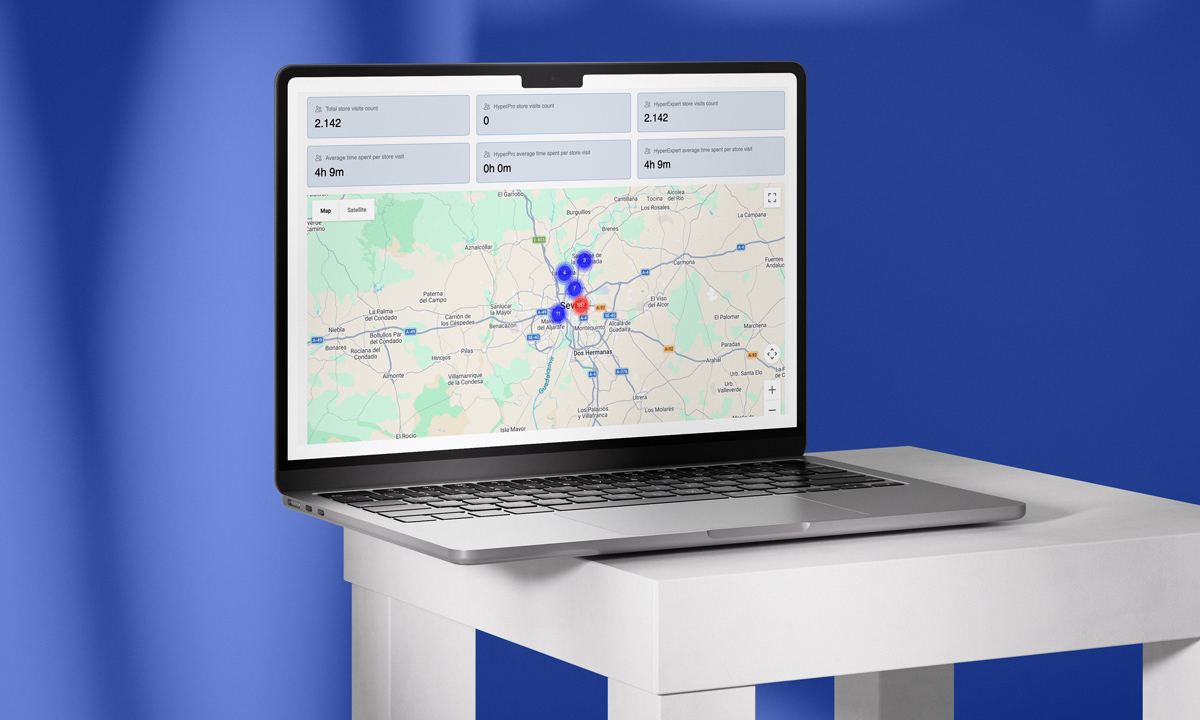
managing promoter work and field teams. Tasks, schedules, field activities, barcode scanning, execution tracking and scoring.
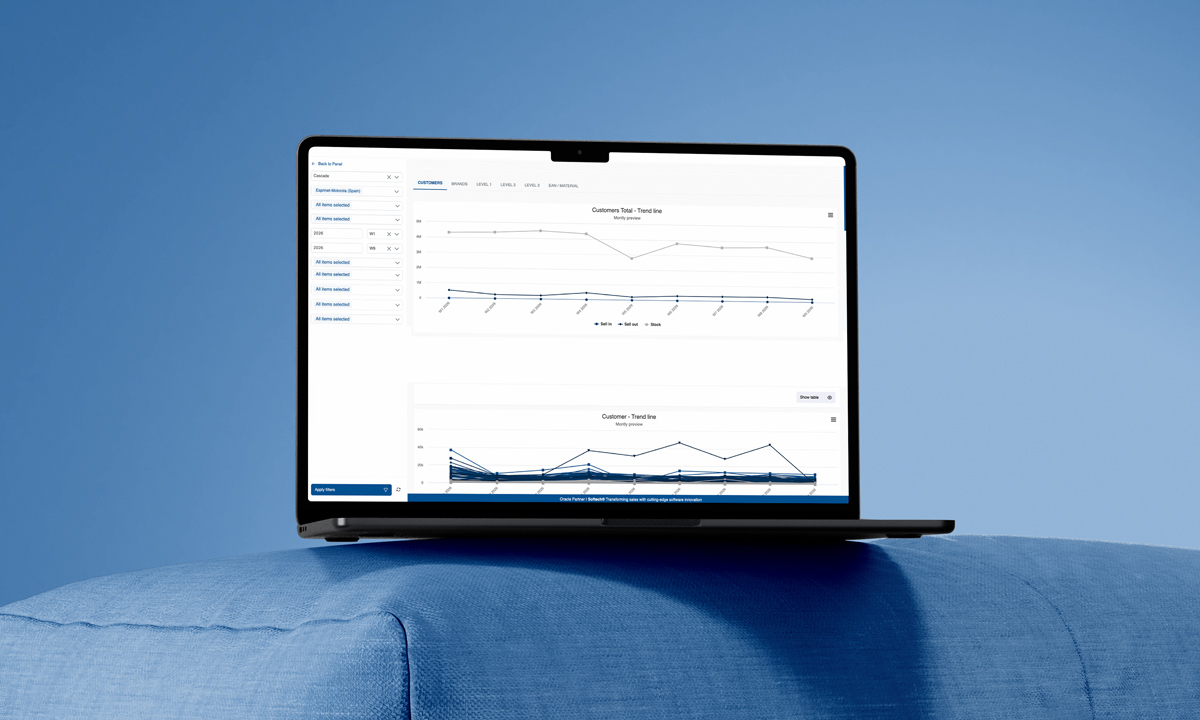
business analytics. It tracks sell-in, sell-out and stock, presenting the data through complex dashboards, charts and multiple levels of analysis.
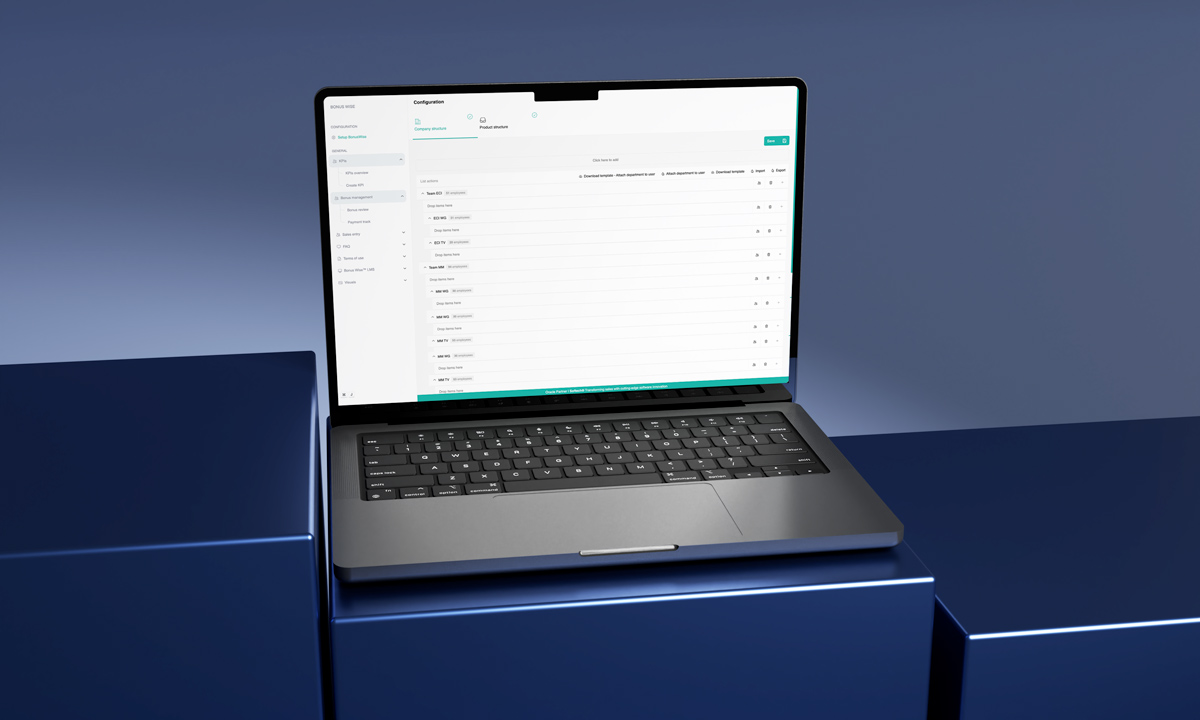
KPI and bonus calculations. Complex KPI structures are defined by employees, teams, products, categories, weights, etc., performance is tracked, and bonuses are calculated based on the results.
Super Analytics
Built above the individual modules is a central analytics dashboard that brings together data from different parts of the Digital Spark system.
Instead of viewing sales, field activities, KPI results and other indicators in isolation, the company gets a unified picture of employee activity and performance.
In this way, the data generated through everyday use of the platform becomes a tool for tracking performance and making business decisions.
Multi-brand system
The platform is designed to support multiple companies and brands without the need to develop a separate product for each one.
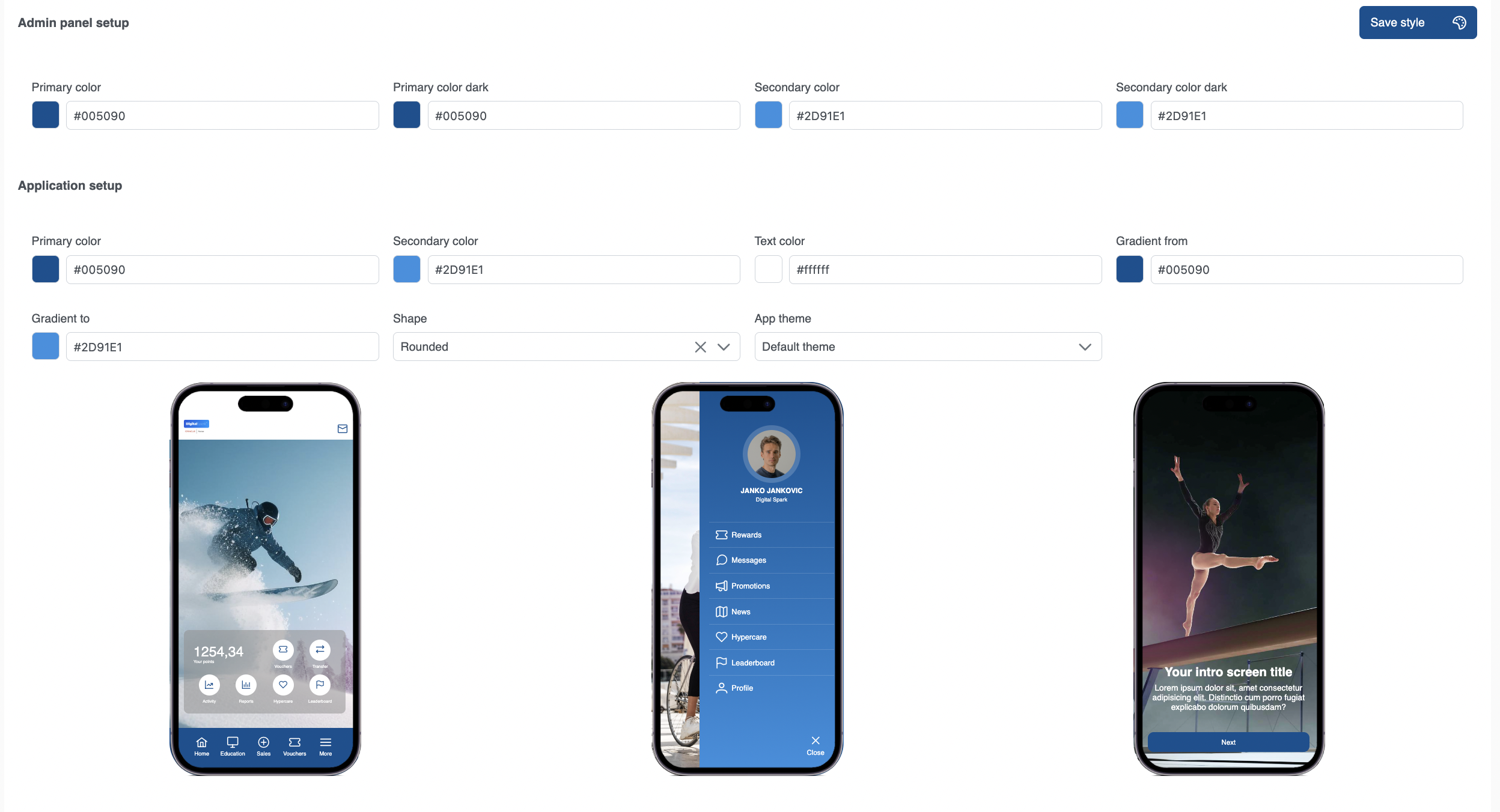
For each brand, the app’s visual identity can be customized — colors, logos, photos and other graphic elements — as well as the available modules, features and system configuration.
In this way, end users get an experience tailored to the company they work for, while the technical system is maintained and developed as a single platform.
Mobile & PWA
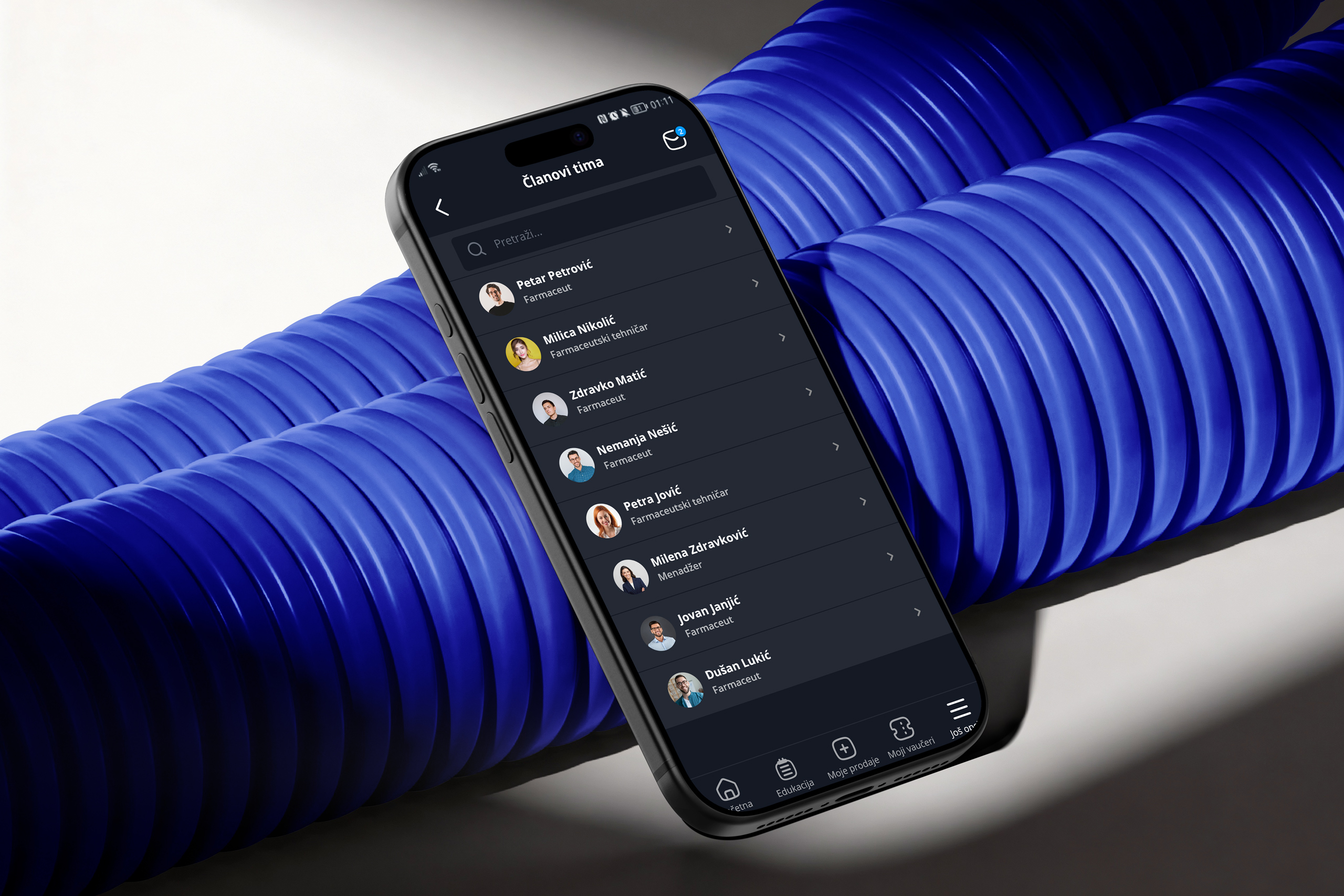
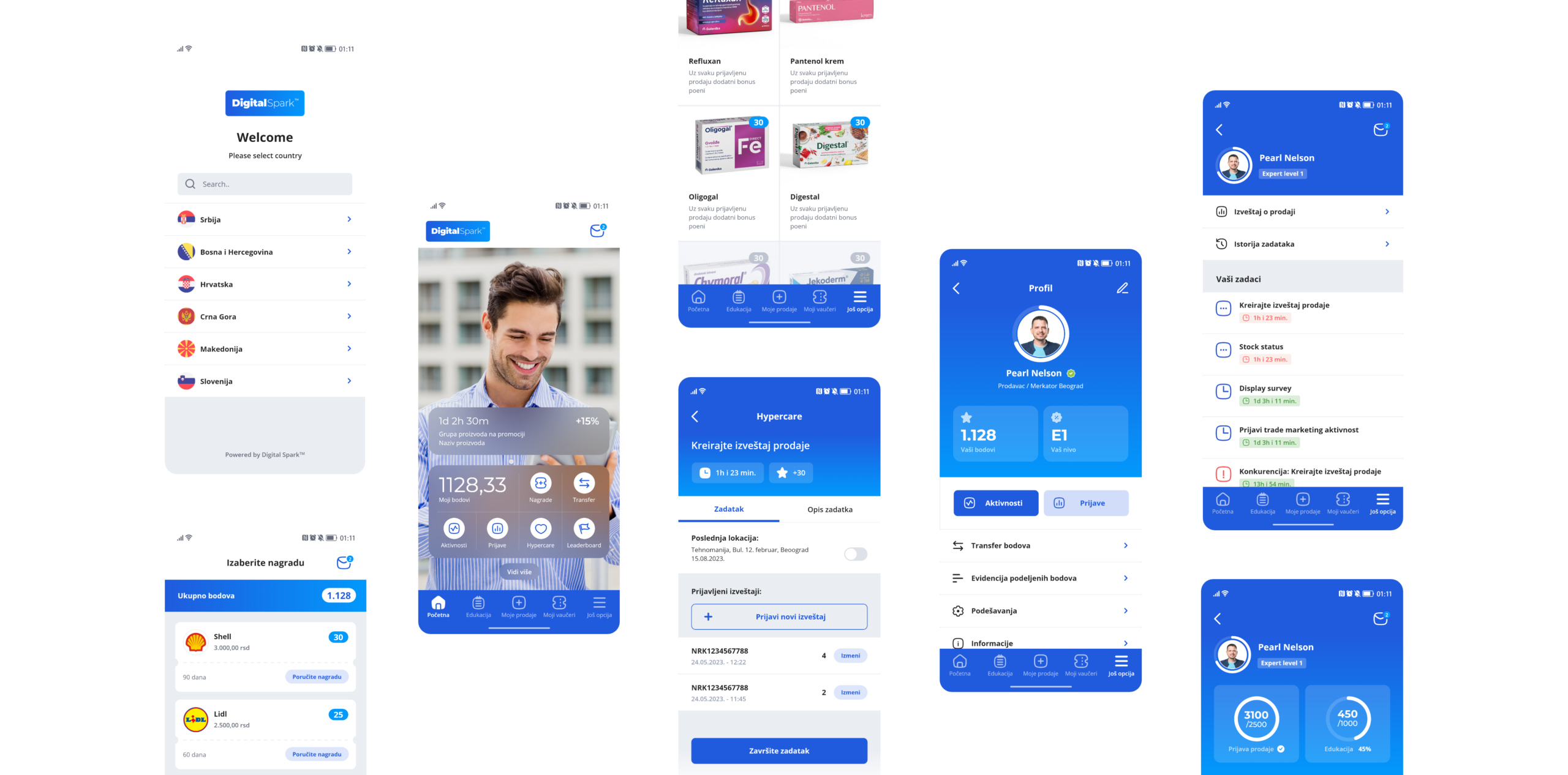
Digital Spark is available through a native mobile app and a PWA, making the platform usable across different work environments and devices.
The mobile experience is specifically tailored to sales and field employees, where quick access to tasks, data entry and current results is essential for everyday work.
The PWA expands system availability and enables much of the functionality to be used directly through a web browser, without installing an app.
Administration
Behind the user-facing apps is a comprehensive administration system that manages virtually every aspect of the Digital Spark platform.
Depending on the active modules, administrators can manage users and teams, products and categories, sales rules, tasks, rewards, KPI structures, content and other system parameters.
The administration area is designed so that a large part of the business logic can be configured without developer intervention, allowing companies to continuously adapt the platform as their business changes.

Infrastructure
In addition to the standard deployment model, on-premise implementations were also delivered for projects with specific infrastructure and data management requirements.
In those cases, Digital Spark is installed directly on the client’s infrastructure, adapted to the specific server environment and the company’s internal IT requirements.
This approach also makes the platform suitable for enterprise environments with strict rules related to hosting, system access and data control.
UI/UX design
The large number of features required careful user experience design. Field employees, sales staff, managers and administrators use different parts of the system and have very different needs.
That is why the interface is organized around the concrete tasks each type of user performs every day, rather than around the platform’s technical structure.
A particular challenge was presented by the analytics dashboards and complex administration settings, where a large amount of data and options had to be displayed in a way that remained clear and understandable.
Development
Because of the system’s scope and the large number of interconnected features, development of the Digital Spark platform was organized around a modular architecture.
New features and business rules can be developed within the existing ecosystem without disrupting other parts of the platform, while the shared infrastructure makes it possible for improvements to be available across different implementations of the system.
This architecture allows Digital Spark to keep growing together with client requirements and new business scenarios.
Result
The result is a scalable software ecosystem that connects employee activity with concrete business outcomes.
Sales, field operations, training, rewards, KPIs, bonuses and business analytics are no longer isolated processes, but parts of a system that exchange data with one another.
Digital Spark enables companies to manage different groups of employees and business processes through a single platform, while the modular architecture, multi-brand support and on-premise deployment options make it possible to adapt the system to the needs of different enterprise clients.