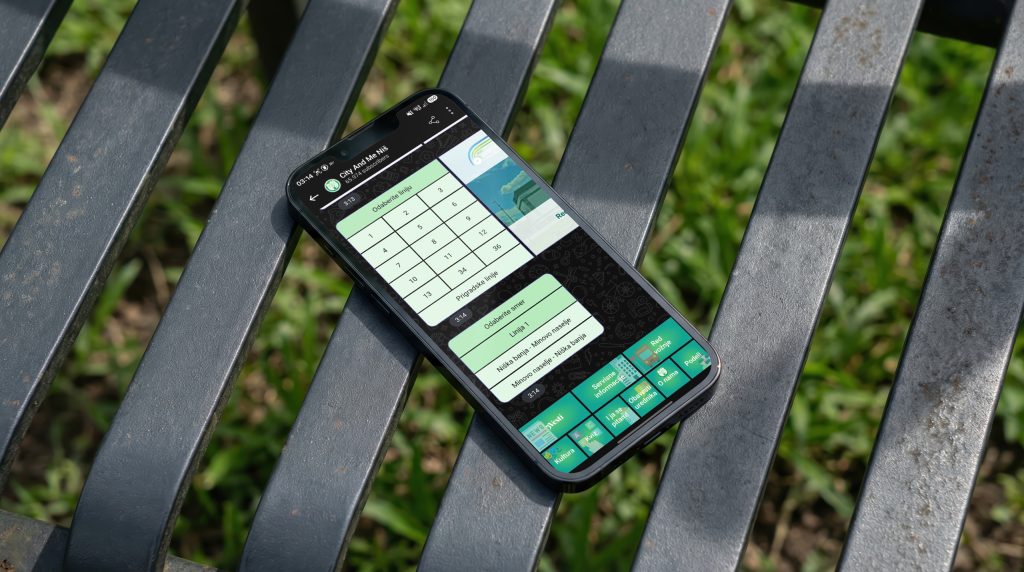
Viber conversation
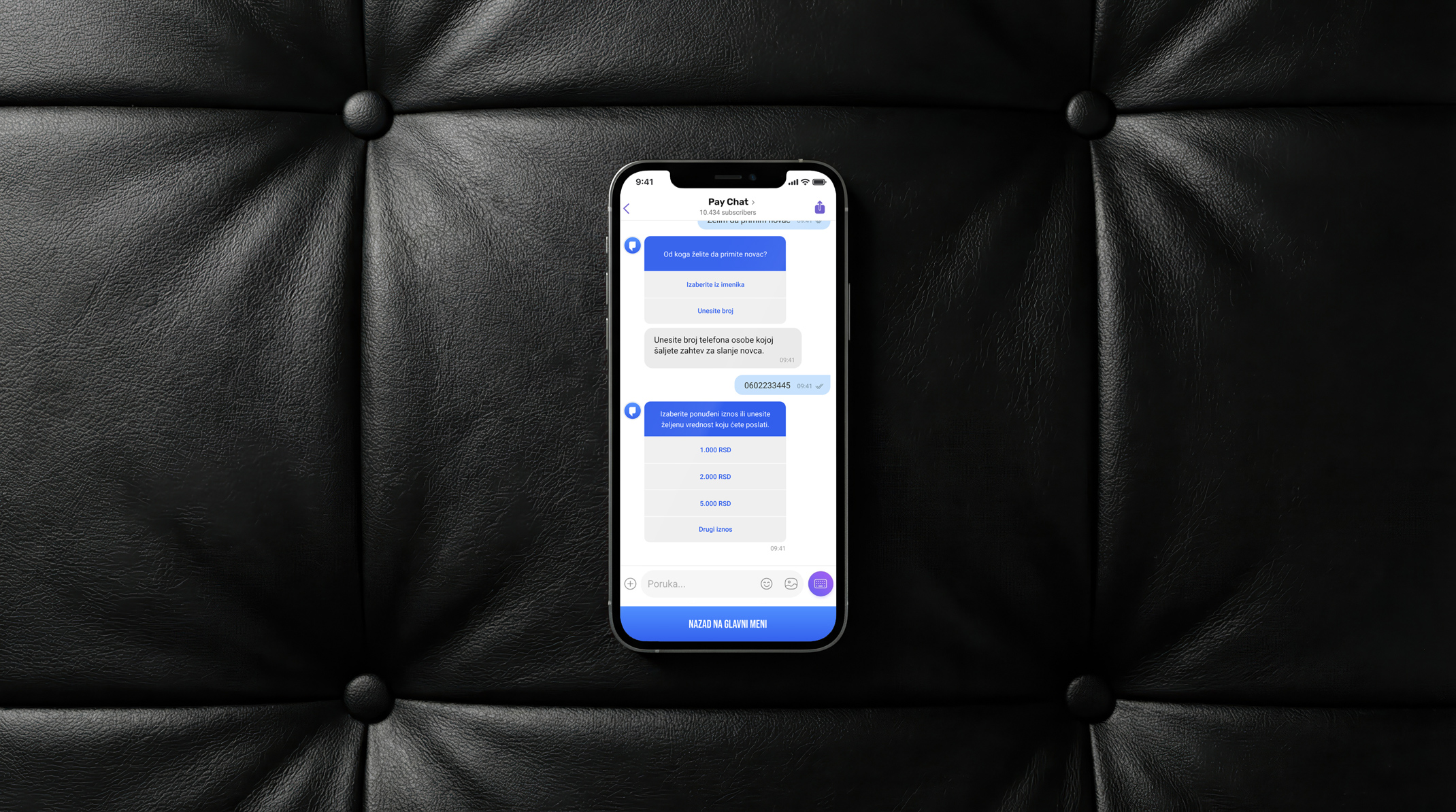
The user starts PayChat directly from the conversation where the need for payment arises.
Payment begins where the agreement begins — in the conversation
PayChat is a fintech system that enables users to initiate money transfers or send a payment request to another person directly through a Viber conversation.
The idea is to simplify everyday payments by removing unnecessary steps between communication and mobile banking. The user starts the process where the need for payment arises — in the conversation — while authorization and transaction execution are handled securely through their bank’s app and the existing instant payment infrastructure.
Behind a few simple steps for the user is a complex integration system that connects Viber, PayChat and the banking environment into a single, intuitive process.
About the project
PayChat is a local fintech solution developed to make everyday P2P payments feel more natural and straightforward.
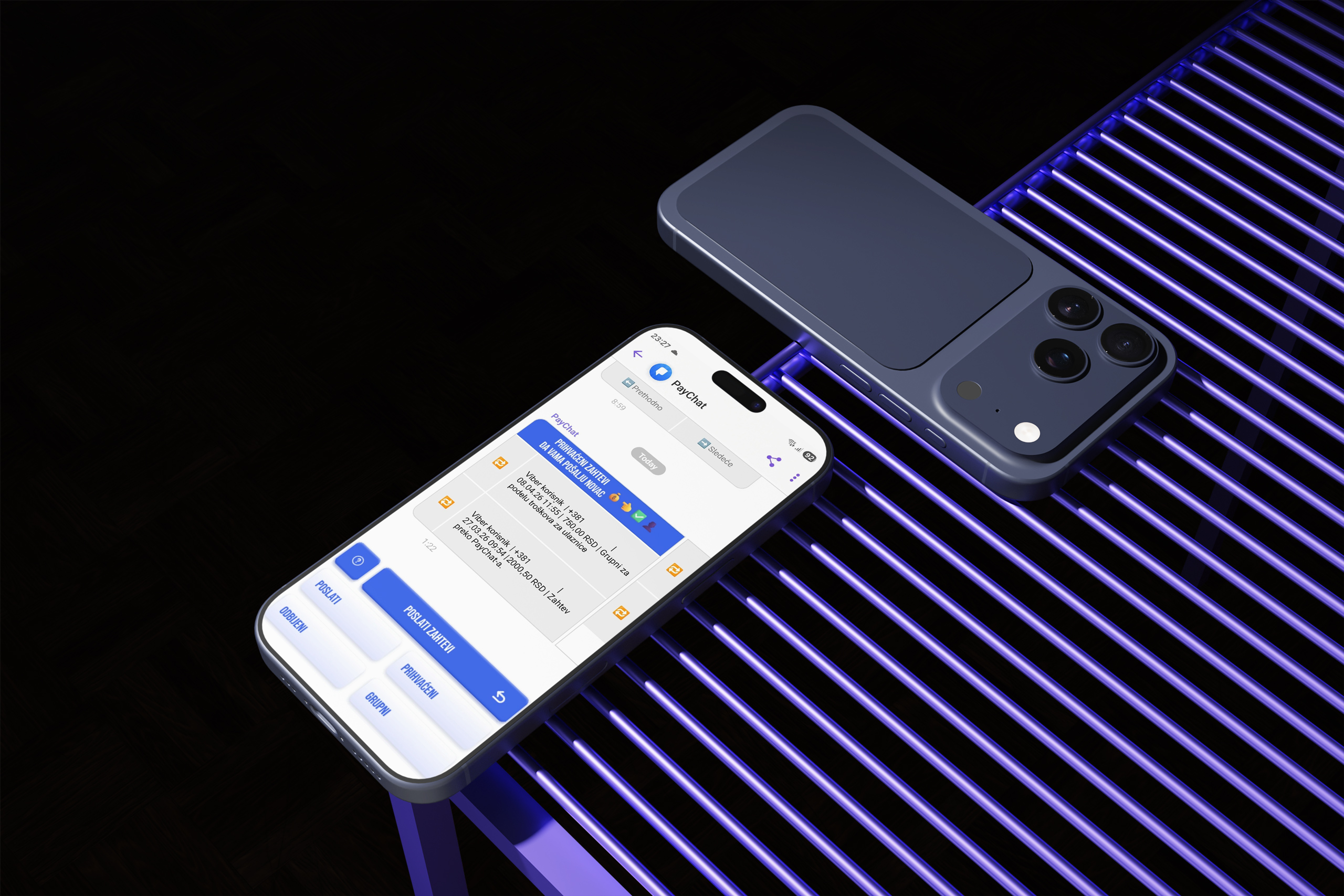
Through Viber, users can initiate a money transfer, send a payment request to an individual, or share a request within a group. Once the transaction is defined, the process continues in the selected bank’s app, where the user confirms the payment using the bank’s existing flow.
The system relies on the existing banking and IPS infrastructure, while PayChat serves as the digital layer that connects the different steps into one unified user experience.
Challenge
With PayChat, the biggest challenge was not just allowing the user to enter an amount and choose a recipient.
Behind a simple Viber interaction is a process that must correctly connect the user, the recipient, the data required for payment, the banking app and the appropriate transaction flow.
At the same time, the user must never feel as though they are using a complex financial system. The process has to be clear and predictable, especially at the moment when it moves from the Viber environment to mobile banking.
That is why much of the development focused on keeping the system’s technical complexity in the background, while the user gets a simple flow from conversation to payment confirmation.
How it works
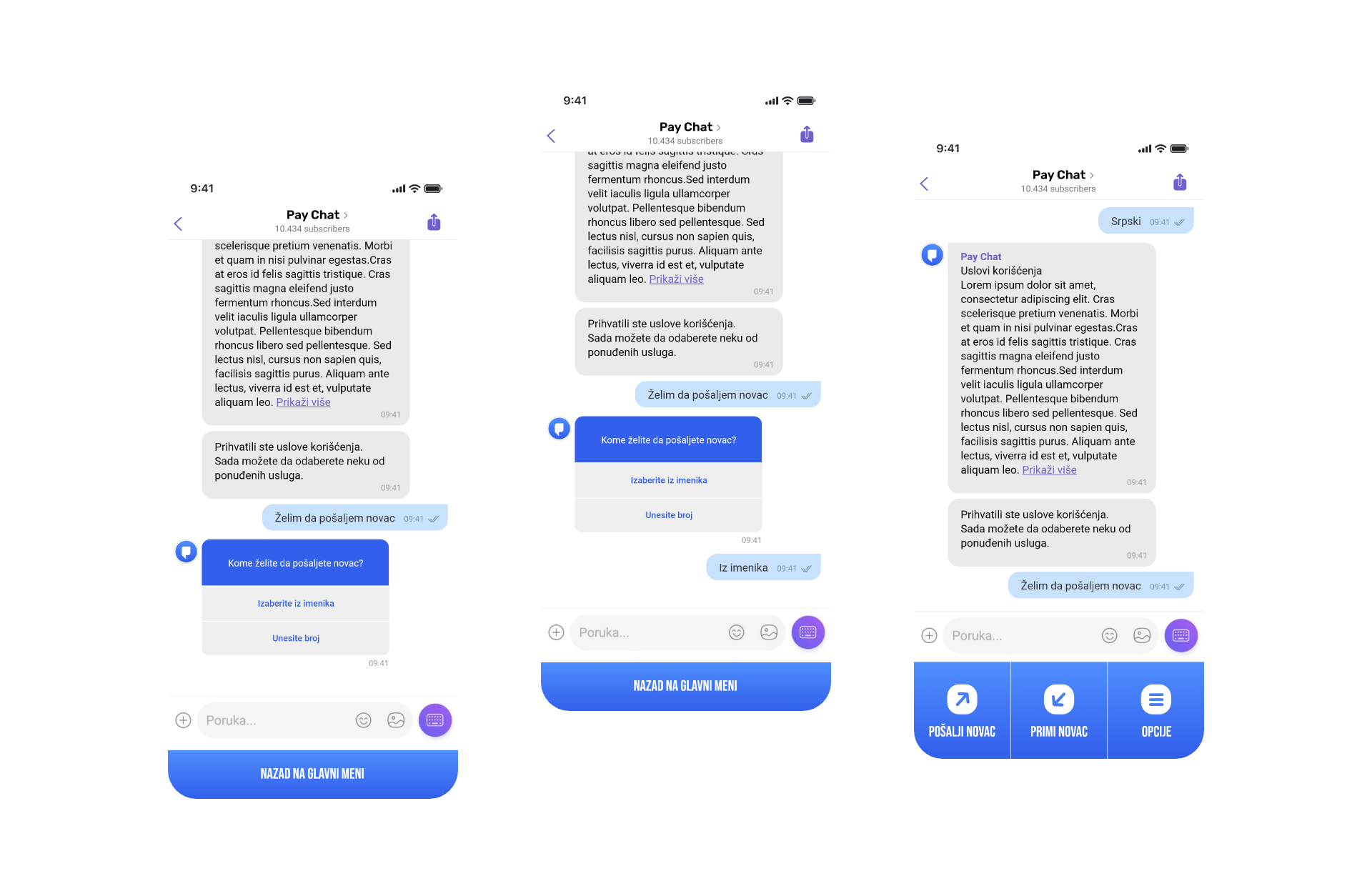
The user starts PayChat directly from the conversation where the need for payment arises.
They enter the amount and choose whether they want to send money or request a payment.
The user selects their bank and continues the process in the mobile banking app.
The transaction is securely confirmed in the bank’s app, using the same method the user already knows.
Once confirmed, the payment is executed through the existing instant payment infrastructure.
User experience
PayChat was designed around situations that already happen every day in conversations: a shared lunch, a trip, buying a gift, or simply paying a friend back.
Instead of agreeing in Viber, then separately opening the banking app and re-entering all the required details, the user can start the process directly from the context of the conversation.
Special attention was given to clear guidance through each step, request statuses, and the moment of transitioning into the banking app for transaction authorization.
Key features
PayChat was designed around situations that already happen every day in conversations: a shared lunch, a trip, buying a gift, or simply paying a friend back.
Instead of agreeing in Viber, then separately opening the banking app and re-entering all the required details, the user can start the process directly from the context of the conversation.
Special attention was given to clear guidance through each step, request statuses, and the moment of transitioning into the banking app for transaction authorization.
Through PayChat, the user initiates a transfer to another person, after which the transaction is confirmed in their bank’s app.
Instead of sending payment instructions, the user can send another person a specific request with a predefined amount.
A money request can also be used within a Viber group, making it easier to split shared expenses among multiple people.
PayChat prepares the necessary information and guides the user to the appropriate banking environment, while the bank remains the place where the transaction is authorized and executed.
System development
Developing PayChat required connecting different technological and financial components into a system that had to function as a single whole from the user’s perspective.
Special focus was placed on reliable data exchange between the different steps of the process, managing request and transaction statuses, and ensuring the system behaved correctly across different user scenarios.
The architecture was designed so that PayChat’s communication layer does not take on the role of a bank: the user’s PIN, password and other authorization credentials do not pass through PayChat, and the final transaction confirmation is completed by the user in their bank’s protected environment.
Security
In a system involved in the payment process, security is not an additional feature but one of the core project requirements.
PayChat does not function as an electronic wallet and does not store user funds. The system enables process initiation and coordination, while user authentication and transaction execution take place through the banking app.
This division of responsibilities makes it possible to deliver a simpler user experience without handling sensitive banking credentials.
Testing
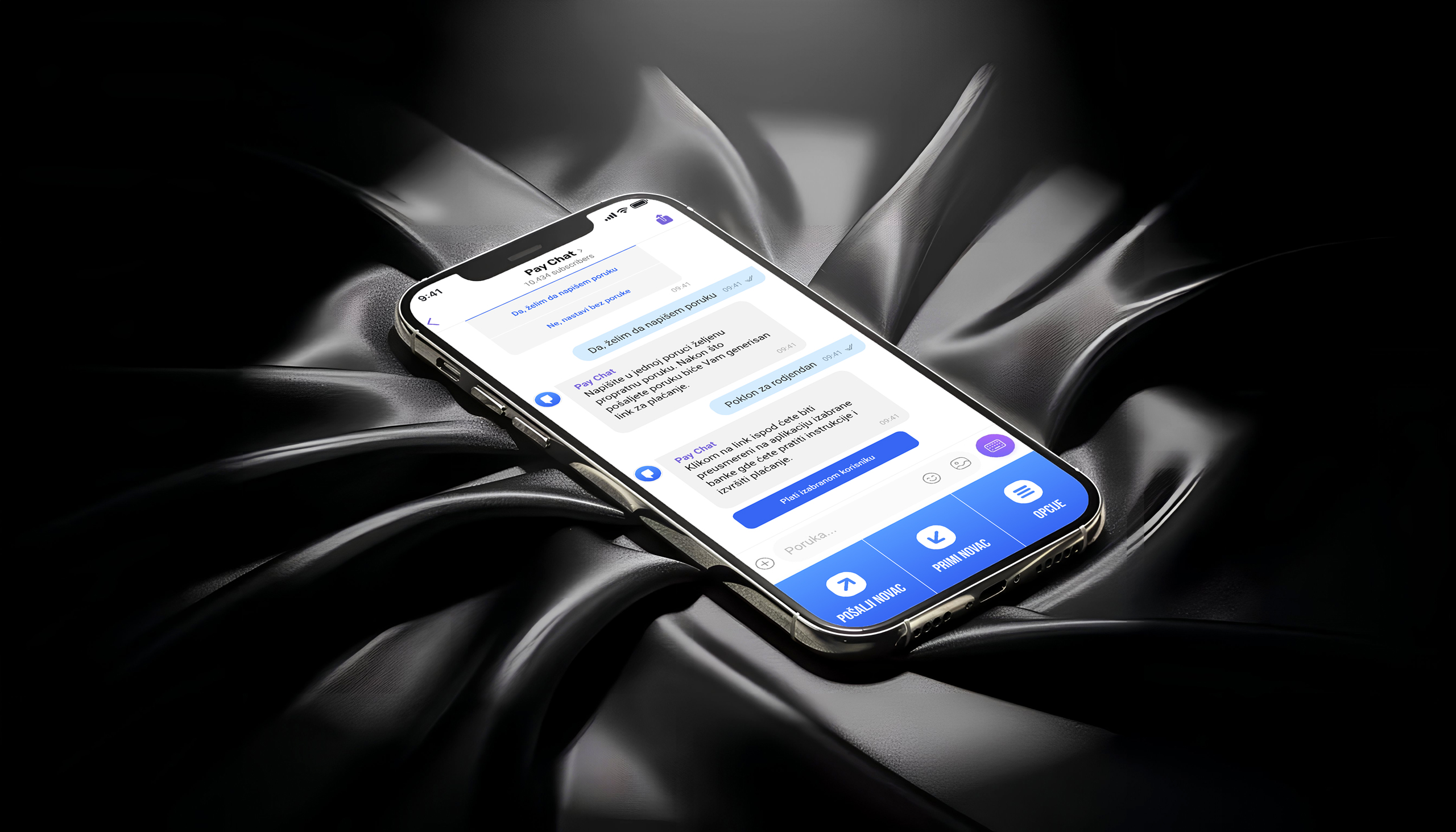
In addition to standard functional testing, PayChat requires thorough testing of complete user flows and the many possible states a request can go through.
Testing covers scenarios from request creation and participant selection, through the transition to the banking app, all the way to different final process states.
Special attention was given to edge cases and to clearly informing the user when the process cannot continue as expected.
Result
The result is a system that brings instant payments closer to the way people already communicate every day.
Instead of introducing yet another separate financial app, PayChat uses Viber as the starting point of the process and connects it with existing mobile banking and payment infrastructure.
Behind a few simple user steps is a complex integration system whose job is to make the technology almost invisible — and let the user focus on what they want to do: send or request money.
We design, develop and connect complex digital systems — from the user interface to backend infrastructure and integrations.